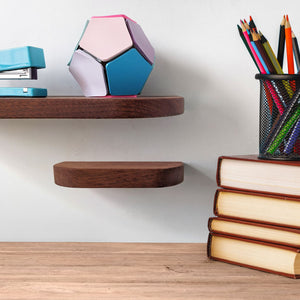


Storage of the kitchen has gone beyond the days of bulky cupboards and closed compartments. Designs that appear open, stylish, and functional without consuming the space are what the homeowners are now seeking. This has seen the introduction of the kitchen floating shelves. These shelves are a mix of visual lightness and practicality of day-to-day use, which makes kitchens look lighter and more accessible. Wall mounted floating shelves can be installed in small apartments as well as large houses, and they fit perfectly well in different designs. Its capability to showcase necessities and also luxury decor has triggered constant competition with the conventional shelves. Learning the functionality of floating wood shelves, their strengths, and weaknesses can be used in making wiser choices in designing the kitchen with natural wood floating shelves.
Understanding Kitchen Floating Shelves as a Concept
Kitchen floating shelves are shelves that are attached to the walls without using any brackets. This support system is invisible, which gives the impression of floating, which is smooth and contemporary. Wall mount floating shelves are commonly made out of solid or engineered wood, metal, or mixed materials. They are very minimal and are effective in both modern and traditional kitchens. These shelves also have the advantage of visibility and easy accessibility of items, unlike cabinets. Such transparency promotes careful planning and imparts a personality by exhibiting cookware, jars, and decor items that are purposely designed and not untidy.
Know why they are better than cabinets:
Point #1: Material Choices That Define Style and Strength
The choice of materials is significant in the durability of the shelf and its aesthetics. Natural wood floating shelves are warm and natural, and combine very well with neutral backsplash and stone countertops. Oak, walnut, and teak are favored because of their strength and grains. Wall mounted floating shelves are also available in customization with regard to thickness, finish, and edge detailing. Wooden wall shelves are created to offer stability and class to homeowners who want their decor to be classic. These shelves are not sensitive to moisture; proper sealing and finishing make them suitable to be used in busy kitchen setups. This is much in contrast to kitchen cabinets.
Point #2: Space Efficiency Compared to Traditional Cabinets
Kitchen floating shelves do not make the kitchen look smaller since they take up maximum space. Cabinets are heavy and are likely to take up too much space on the walls, particularly in a small kitchen. Wall mount shelves depict an illusion of openness since the wall space can be seen. This is a good technique in a small design that all inches count. The shelves may also be fitted at the desired height, which fits well around windows, appliances, or corners. Essentially, due to the decreased bulk, kitchens become less heavy, breathier, and easier to navigate without the need to add too much storage that may be unnecessary in day-to-day lives.
Point #3: Accessibility and Everyday Convenience
Floating wood shelves have one of the greatest strengths in accessibility. Objects in the kitchen floating shelves can always be reached, and it does not require opening doors or bending over. Most commonly used food items, spices, and utensils become more accessible during cooking. This design makes one organized because visible objects will tend to be neat. Shelves encourage you to be mindful of where you place the items, unlike deep cabinets, where you lose possessions. To households that are efficiency-oriented, floating shelves enhance the ease of workflow and expedite meal preparation patterns. They do not involve any bending, door opening and hassle for looking for necessities while cooking, unlike cabinets.
Point #4: Design Flexibility Across Kitchen Styles
The floating shelves can be adjusted to any design theme. The benefits of rustic kitchens include the use of thick, wooden planks, and modern interiors tend towards thin and streamline outlines. Wall mount shelves can be developed symmetrically to give a refined appearance or staggered to give a more relaxed appearance. The finishes are bare wood all the way to matte finishes and glossy lacquers. This flexibility enables shelves to adapt to the changing decoration styles. Cabinets, on the other hand, involve more significant renovations to refresh, and shelves are the more adaptable design from a long-term perspective.
Point #5: Maintenance and Cleaning Advantages
With open shelving, maintenance is made easier. On the floating wood shelves, dust and spills can be easily observed and cleaned more easily than in closed cabinets. This is achieved by regular wiping of surfaces without having to fuss with the hinges or hardware. Shelves made of wood with harsh and waterproof coatings are resistant to stains and water. Cabinets can be very cumbersome in pockets and may need more intensive cleaning. To the families who care more about cleanliness and simple maintenance, floating shelves are more convenient and time-saving without loss of aesthetics.
Comparing Floating Shelves and Cabinets Side by Side
|
Feature |
Floating Shelves |
Traditional Cabinets |
|
Visual Impact |
Open, airy appearance |
Solid, enclosed look |
|
Accessibility |
Items always visible |
Items hidden behind doors |
|
Installation Cost |
Generally lower |
Typically higher |
|
Design Flexibility |
Easy to customize |
Limited without renovation |
|
Maintenance |
Simple cleaning |
More detailed upkeep |
|
Space Efficiency |
Ideal for small kitchens |
Can feel bulky |
Conclusion: Making the Right Choice
Shelves that are floating are used to improve the openness, accessibility, and flexibility, whereas cabinets can be used to offer concealed storage. Natural wood floating shelves are added to provide a warm and personal touch and make kitchens welcoming.
Upgrade your kitchen storage with custom-made wooden wall shelves by Nook Woodworking, where quality wood, accuracy in production, and classic style make the kitchen functional and beautiful for every modern kitchen.
FAQs
Do floating shelves have sufficient strength that they can be used in the kitchen?
Yes, with quality brackets properly installed on shelves, it is easy to support dishes, jars, and cookware, considering weight limits and anchors on the walls.
Do floating shelves render kitchens cluttered?
Placement and minimal decor allow the space to be organized. The attentive styling ensures that floating shelves remain purposely clean.
Can wooden shelves be used in the wet kitchen?
Wood shelves are safe and are durable under normal conditions in the kitchen because of the moisture resistant and sealed, and treated wood.